Wednesday, 15 July 2015

The composite scores for economic inclusiveness

Economic Inclusiveness: Malaysia Was Biggest Winner

The Philippines ranked the poorest among ASEAN-4 economies in terms of economic inclusiveness. Together with Indonesia and Thailand, it lost one rank from 1990-1999 to 2000-2012. By contrast, Malaysia improved by 2 ranks during the same period. 

The other dimension of social inclusiveness, which is measured by the following outcome indicators: (1) gender parity at the secondary school level; (2) gross secondary school enrolment; (3) average years of schooling; (4) percentage of live births attended by skilled health staff; and (5) mortality rate of children under age 5. 

Among ASEAN-4 economies, the rank of the Philippines in terms of social inclusiveness deteriorated the most:  from 10 in the decade of 90s to 14 from 2000-2012. Indonesia improved by one rank; Malaysia’s rank was unchanged; while Thailand lost by one rank. 

The other dimension of inclusiveness is environmental inclusiveness. It is measured by: (1) access to improved sanitation; (2) access to water sources; (3) annual change in total greenhouse gas (GHG) emissions; (4) annual change in forest area; and (5) annual change in the share of fossil-fuel energy consumption to total consumption of energy. 

None of the ASEAN-4 economies suffered deterioration in rank in environmental inclusiveness during the period of study. Both Malaysia and Thailand improved significantly in terms of environmental inclusiveness. 

LESSONS TO BE LEARNED

First, the empirical results suggest that much more needs to be done by the present and future Philippine governments in order for it to catch up with its ASEAN competitors. 

Second, it is not possible to achieve inclusivity by neglecting agriculture and the rural sector. The first recommendation of the study is for authorities to address the neglect of the rural sector. The study proposes: “to increase agricultural productivity by focusing on quality and standards, investment in R&D” and to “ develop non-farm sector through rural industrialization.” 

These recommendations are right on target for the Philippines, where one-third of its work force comes from agriculture and one-half of the country’s poor live in rural areas. 

The ESCAP study should open the eyes of policy makers on the real meaning of inclusivity. The body of evidence shows that the present administration’s talk about inclusive growth is superficial since its attention to agriculture and the rural sector is, at best, perfunctory. 


Source: Malaya 2015, "THE REAL EVIDENCE ON INCLUSIVENESS: THE PHILIPPINES FAILS", viewed 9 July 2015,<http://www.malaya.com.ph/business-news/opinion/real-evidence-inclusiveness-philippines-fails>

The real meaning of Inclusiveness

       The Philippine government is committed to the lofty goal of strong, sustainable, inclusive growth. But do policy makers truly understand what inclusiveness means? What do the evidence show about the state of economic, social and environmental inclusiveness of the Philippine economy? What should government authorities do to make growth inclusive?


There Can Be No Inclusive Growth, If Agriculture and the Rural Sector Are Being Neglected


       A recent 2015 study sponsored by the Economic and Social Commission for Asia and the Pacific (ESCAP) shows that over a period of 23 years, from 1990 to 2013, has Philippines has the worst record among its ASEAN-5 peers in terms of economic, social and environmental inclusiveness. This should be a wake-up call for policy makers who boast the Philippines is the best performing country among its ASEAN-5 peers. The harsh reality is that more meaningful and deeper reforms need to be done by government authorities, present and future, before the Philippines can catch up with its ASEAN-5 neighbors. 


       Oliver Paddison, the author of the ESCAP study, said that inclusiveness is a multi-dimensional concept. Inclusiveness should not be equated with strong growth, though it might be a strong anchor for it. Stated differently, strong growth is a necessary but not sufficient condition for inclusive growth. Inclusiveness is “ typically measured using income related indicators.” How does the Philippines compare with its ASEAN-4? Here, we omitted Singapore. There’s no point comparing ASEAN-4 economies with Singapore, which is a first-world city-state.


Source: Manilaspeak 2015, "The Real Meaning of Inclusiveness", viewed 9 July 2015,<http://www.manilaspeak.com/ben-diokno/the-real-meaning-of-inclusiveness/>

Monday, 13 July 2015

The Challenges of ASEAN Political-Security Community

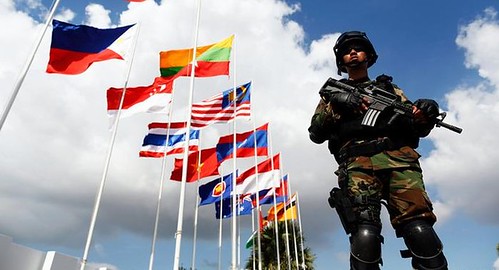
        ASEAN member states (AMS) are facing challenging political and security issues in the region, including an arms race, corruption, the development gap and the impact of it, ethnic clashes and intolerance, human trafficking, human rights abuses, an illicit drug trade, migration, money laundering, social injustice, terrorism, territorial maritime disputes, and other forms of transnational crimes.


       Through political and security development cooperation among the AMS, the ASEAN Political-Security Community (APSC) is institutionally framed to effectively manage these issues. The APSC constitutes one of the three pillars supporting the ASEAN Community ─ alongside ASEAN Economic Community (AEC) and ASEAN Socio-Cultural Community (ASCC). Under the APSC blueprint, which provides a roadmap and timetable, the APSC will be established by 2015.


       One of the major problems impeding the progress of establishing the ASEAN Community and the APSC is the slow pace of ratification and program implementation by the AMS.


       In addition to the weak political commitment of the AMS, this slow progress may also be attributed to the insufficient power of the ASEAN Secretariat to coordinate, monitor and “direct” the policies, programs and activities of the ASEAN and the AMS in achieving the APSC. With its inadequate operational budget, the ASEAN Secretariat functions like an ASEAN post or liaison office.


       To enforce these conventions, ASEAN must have a court that has the power to adjudicate disputes among the AMS and punish (transnational) crimes committed in ASEAN’s jurisdiction. Therefore, to make this court work effectively, the AMS should carefully and clearly redefine and reinterpret the scope and definitions of “sovereignty”, “non-interference”, and “territorial integrity” principles stipulated in the ASEAN Charter.


Source:
1. Roby, A 2013, Building the ASEAN Political-Security Community, viewed 10 July 2015, < www.thejakartapost.com/news/2013/02/05/building-asean-political-security-community.html>

Sunday, 12 July 2015

ASEAN Political-Security Blueprint


Goals of APSC is to set up rule-base community of shares of norms and values. 

To build cohesive, peaceful, stability and resilient region with shared responsibility for comprehensive security. 

To build dynamic and outward looking region in an increasingly integrated and interdependent world.

Since the APSC seeks to strengthen the mutually beneficial relations among ASEAN member countries and its dialogue partners and others external relations, who agreed to undertake the stipulated actions under different sectorial bodies, actions were continually affectively as following 2008-2009 approaches. It is important that works in all level must be done affectively. 

·  ASEAN Foreign Ministers' Meeting (AMM) 
·  ASEAN Regional Forum (ARF)
·  ASEAN Defence Ministers Meeting (ADMM)
·  ASEAN Law Ministers Meeting (ALAWMM)
·  ASEAN Ministerial Meeting on Transnational Crime (AMMTC)


Up to this point, ASEAN security and political cooperation is focused on highly selective issue of common concern. To build on what has been constructed over the years in the field of political and security cooperation, the ASEAN Leaders have agreed to establish the ASEAN Political-Security Community (APSC) officially guide by the ASEAN Charter aiming to ensure that countries in the region live at peace with one another world in a just, democratic and harmonious environment.
The APSC Blueprint would also have the flexibility to continue programmes/activities beyond 2015 in order to retain its significance and have an enduring quality.

https://farm8.staticflickr.com/7179/13771133134_d35f8772b4.jpg


Sources:

1.       Library 2009, Roadmap and Implementation of the ASEAN Community, viewed 10 July 2015, <http://digi.library.tu.ac.th/thesis/po/1278/04chapter3.pdf>

Saturday, 11 July 2015

Malaysia as ASEAN Chair: What Are The Challenges?

           A decade ago, in 2005, Malaysia chaired ASEAN. During its chairmanship, two notable events took place. First, it hosted the first East Asia Summit (EAS) where heads of states gather together for dialogue on broad strategic, political, and economic issues. Second, it established a mechanism that allows ASEAN leaders and civil society representatives to exchanges ideas with one another. 

        This year 2015, Malaysia is again chairman of ASEAN and, as one of the five founding members of ASEAN, there are high expectations of its capability to establish a stronger ASEAN community, facilitate the fulfillment of economic integration, and maintain the centrality of ASEAN in the regional architecture. Its ability to lead will be tested as it balances securing the interests of the region along with its own national interests. 

        The changed geopolitical and economic realities in the region, as evident in the South China Sea disputes and the movement towards the establishment of an integrated ASEAN Community, will affect Malaysia’s chairmanship in ASEAN. How it will be able to adapt and cope with these changes remains to be seen.Malaysia’s ASEAN Priorities.

Malaysia’s ASEAN Priorities

       Establishing a people-centered ASEAN is the primary goal of Malaysia this year as is reflected in the overall theme -“Our People, Our Community, Our Vision.” For the longest time, ASEAN has been criticized as an elite-driven and state-centric project. This is illustrated by the fact that activities and projects of ASEAN are only known among experts, political leaders, and government officials but little information is disseminated to the citizens and concerned stakeholders. This low awareness level is a factor hindering the overall achievement of community building, as expressed by ASEAN’s Secretary General Le Luong Minh in his remarks on ASEAN’s community building efforts in March 2013.

       The success of the ASEAN Community will not only be reflected in the improvement of people’s lives but also how the people take ownership of it. By creating an inclusive environment that welcomes and engages ASEAN citizens in the building process, Malaysia will surely be able to bring ASEAN a step closer to the people. Malaysia’s Prime Minister Datuk Seri Najib Tun Razak emphasized that there must be involvement of all sectors in the society in ASEAN activities and processes.


Source:
1)     Jeremie P. Credo 2015 , Malaysia as ASEAN Chair: What are the challenged?, viewed 8 July 2015, <http://thediplomat.com/2015/03/malaysia-as-asean-chair-what-are-the-challenges/>

Friday, 10 July 2015

ASEAN: Bringing the cultural perspective

      With a population of over 500 million people, Southeast Asia is blessed with diverse ethnicities, languages, food and music. Unfortunately, this richness in culture and art has never been explored in order to introduce and promote ASEAN integration as leaders of the region have opted to focus on security, political and economic issues.

      Cultural activities and cooperation among ASEAN members are integral parts of the ASEAN road map, but few events have been organized to realize this cultural diplomacy.

Youths are the main consumers of popular culture. They are looking for alternative fresh ways to deal with problems and cultural diplomacy seems to fit in with their mission, similarly with sporting diplomacy. 

      The last is the presence of trust between different societies. In a forum of culture, each group will present their values, beliefs, norms and ideologies. Cultural events are the place for celebrating difference.

      Participants are encouraged to respect different values and norms. Freedom of expression gives room for creating friendships and trust between them. ASEAN has designed a roadmap to promote cultural diplomacy. 


      Economic, political and security cooperation will always be important issues but cultural diplomacy has been neglected for a long time. However, ASEAN is blessed with a diversity of cultures. 


Source:
1)        1.)     Verdinand Robertua 2015, Where is ASEAN cultural diplomacy?, viewed 10 July 2015, <http://www.thejakartapost.com/news/2013/06/14/where-asean-cultural-diplomacy.html>

Wednesday, 8 July 2015

Challenge Of ASEAN Economic Community

      Each of the four pillars (a single market and production base, a competitive economic region, equitable economic development, and integration with the global economy) presents a demanding set of challenges to be met before the AEC can be fully realized. One challenge that cuts across the four pillars is achieving greater engagement with the private sector and the broader community. The AEC may be led by governments, but it cannot succeed without fully engaging business and the public at large. Efforts to prepare the private sector have enjoyed negligible success and public awareness is equally abysmal. This needs to change quickly if the AEC is to make a difference.


      Many of the remaining challenges to realizing the AEC goals are tied to ASEAN’s ability to harness cooperation and commitment, and address the development divide among its members. ASEAN is home to some of the richest (Brunei Darussalam and Singapore) and poorest (Cambodia, the Lao People’s Democratic Republic, and Myanmar) economies in Asia. Strategies that will narrow the income gap and allow spillovers from richer, more technologically advanced members to least developed countries need to be strengthened and sustained. An important step is to develop modern, high-quality infrastructure that will enhance connectivity within the region. This will create vast opportunities for connecting markets and improving the physical mobility of people, goods, and knowledge within the region. 
    

      Although ASEAN has come a long way toward realizing its goal, the challenges that remain suggest that the AEC will not meet its approaching deadline. Accommodating AEC accords will not be easy when they require changes to domestic laws or even the national constitution. If the AEC is to be more than a display of political solidarity, ASEAN must find a way to give the commitments more teeth. The 2015 deadline should be viewed not as the final destination but as a milestone on the slow and long journey towards the AEC.


Source:
1) East Asia Forum 2014, Four Pillars of the AEC and the Looming Implementation Deadline, viewed 8 July 2015, < http://www.economywatch.com/features/Four-Pillars-of-the-AEC-and-the-Looming-Implementation-Deadline.12-25-14.html>
2) Menon, J. 2014, Moving too slowly towards an ASEAN Economic Community, viewed 8 July 2015, < http://www.eastasiaforum.org/2014/10/14/moving-too-slowly-towards-an-asean-economic-community/>